 |
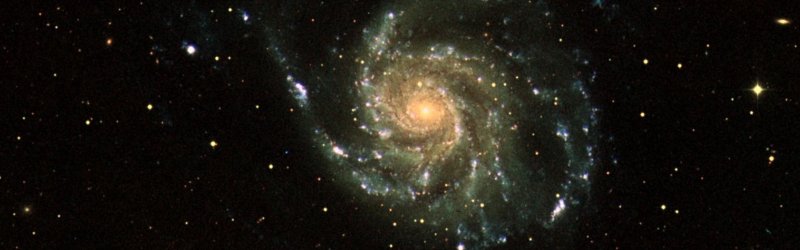
This is a three color image of the nearby spiral galaxy Messier 101 (M101). It is a combination of GALEX images taken with the FUV and NUV detectors, (colored blue) and two images in visible light from the Digital Sky Survey (colored green and orange). |
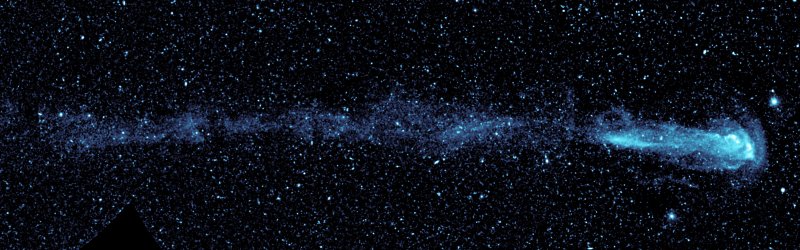 |
An amazingly long comet-like tail behind a star streaking through space at supersonic speeds. The star, named Mira after the Latin word for "wonderful," has been a favorite of astronomers for about 400 years. It is a fast-moving, older star called a red giant that sheds massive amounts of surface material. |
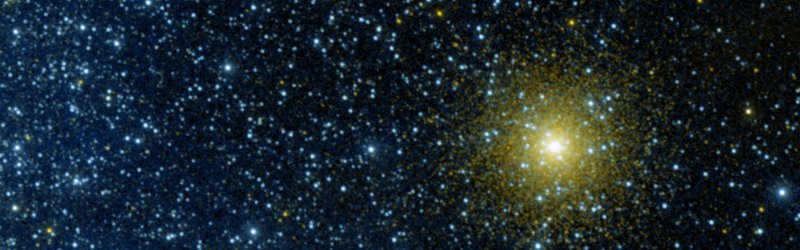 |
A globular star cluster, called NGC 362, in our own Milky Way galaxy. In this new image, the cluster appears next to stars from a more distant neighboring galaxy, known as the Small Magellanic Cloud. |
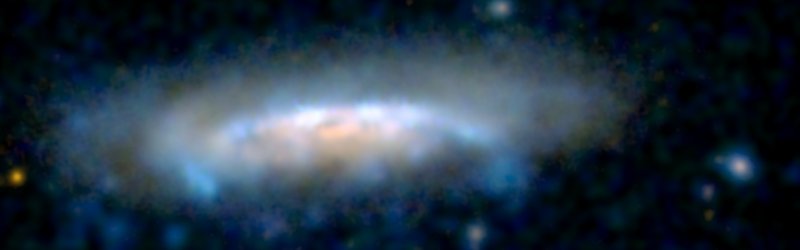 |
Hot-gas surrounding NGC 4522 in the Virgo Cluster is shoving the star forming material out of the galaxy's outer disk in a process astronomers call, "ram-pressure stripping." |
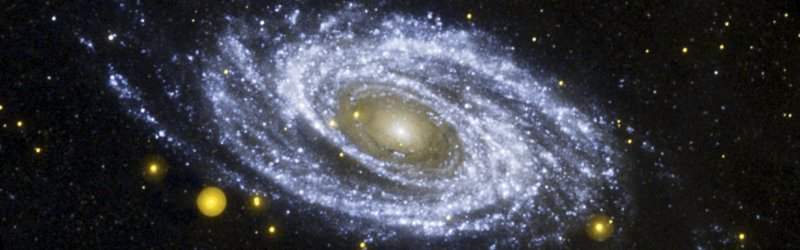 |
This is a three color image of the nearby spiral galaxy Messier 101 (M101). It is a combination of GALEX images taken with the FUV and NUV detectors, (colored blue) and two images in visible light from the Digital Sky Survey (colored green and orange). |
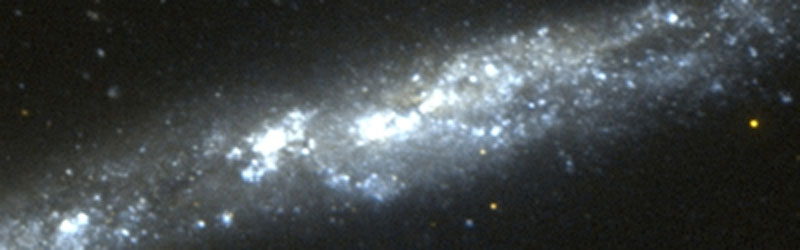 |
Nearby edge-on spiral galaxy NGC 55 lies 5.4 million light years from our Milky Way galaxy and is a member of the "local group" of galaxies that also includes the Andromeda galaxy (M31), the Magellanic clouds, and 40 other galaxies. This picture is a combination of GALEX images taken with the FUV (colored blue) and NUV detectors (colored red). |
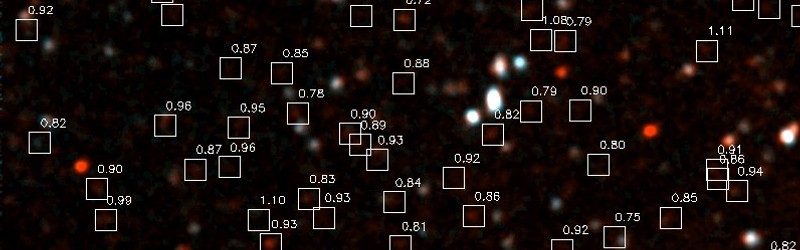 |
This blowup of a small section of one of the GALEX Deep Imaging Survey (DIS) observations is a combination of images from the FUV detector (colored blue) and NUV detector (colored red). |
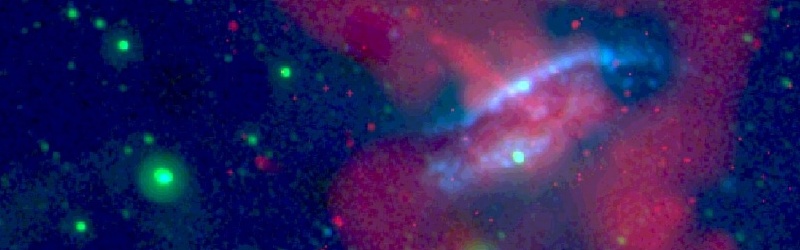 |
This is the peculiar galaxy Centaurus A, which is 30 Million light years from Earth. This picture is a combination of the GALEX Far UV image (colored blue) the GALEX Near UV image (colored green and an image taken by NASA's great observatory Chandra (colored red) that measures the X-ray emission from around this galaxy. |
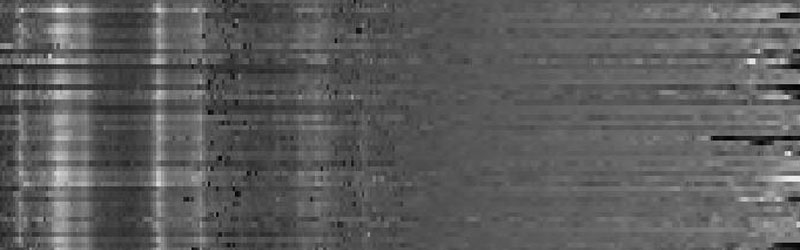 |
Image of 101 'raw' spectra from the Spitzer SDSS GALEX Spectroscopic Survey (SSGSS). PAH bands and some line features are prominent. |
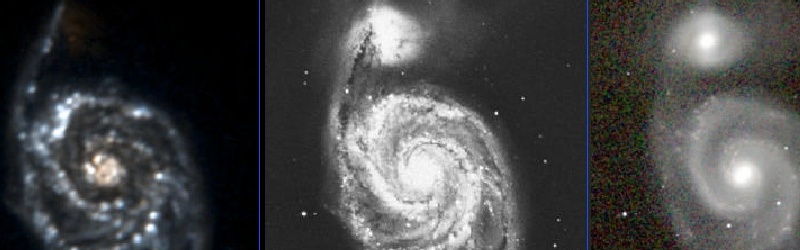 |
A comparison of images of the spiral galaxy Messier 51 (M51) taken by GALEX in ultraviolet light, the visible light image from the Digitized Sky Survey (DSS), and an image in near infrared light from the two micron all sky survey (2MASS). This galaxy, also known as the "Whirlpool galaxy", is 27 Million light years away from the Earth. |
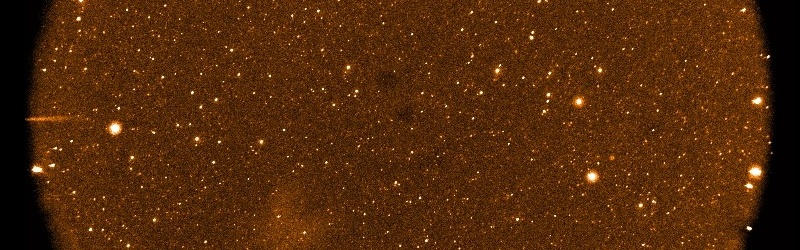 |
First image constructed as part of the GALEX Deep Imaging Survey (DIS). This image is taken from a region of the sky called the 'Groth survey strip' named after the principal investigator of a Hubble Space Telescope survey in the constellation Ursa Major (the "Big Dipper"). |
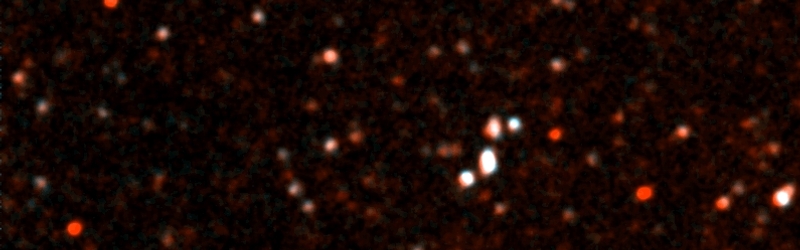 |
Faint red objects in this image are believed to be galaxies at a distance of 6 billion light years. Although only 2% of the full DIS image, hundreds of galaxies can be detected. When the DIS is completed more than 1 million distant galaxies will be detected from the ultraviolet observations of GALEX. |
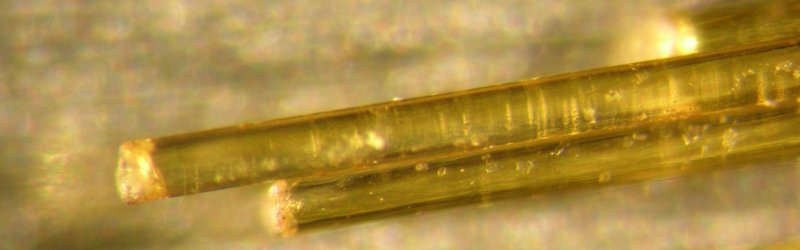 |
Close-up of individual 100 micron fibers (pre-polishing) for use in the FIREBall experiment. |
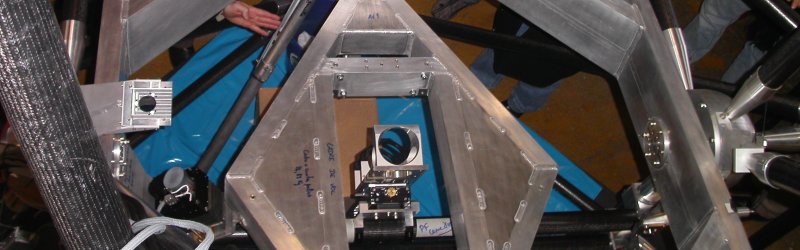 |
View from above the siderostat frame of the FIREBall experiment. |